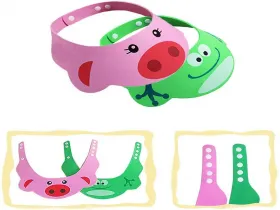
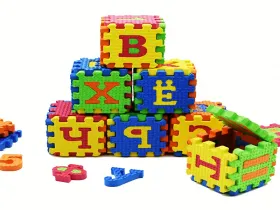
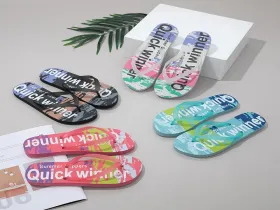
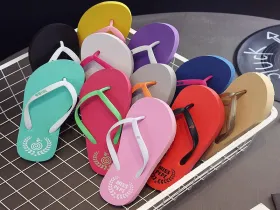
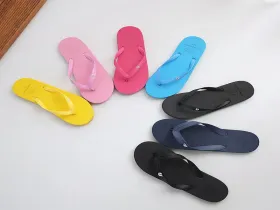
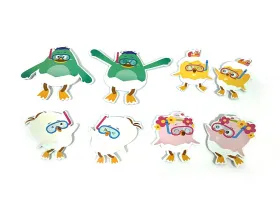
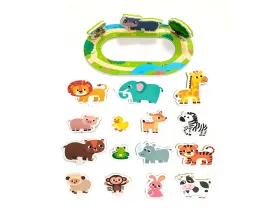
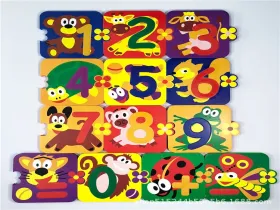
Marketplace sellers who list custom EVA foam products for cross-border e-commerce face a practical question before the first purchase order: how many units should I ask the factory to produce per run? Order too few and your unit price collapses under setup and tooling costs. Order too many and you pay storage fees, tie up cash, and risk dead stock when a listing slows down. The tiers below set out how those quantity brackets work at a Shenzhen EVA foam factory that makes private label kits — bath sets, building blocks, traction pads, promotional flip flops — and which bracket fits each stage of a marketplace business.
Start with the cost that does not change with quantity
Every custom EVA kit carries fixed work before a single finished unit exists: an opening for the shape, a plate for the printed artwork, and a colour formula matched to your brand. Fulikai states that plate-making takes five to seven working days at one place on its site and advertises a five-day turnaround at another, so treat the plate stage as roughly a week and get the figure confirmed in your own quotation. The same page describes sample plates as costing only a few hundred dollars rather than thousands. Either way, this fixed work is why the first tier behaves differently from the rest: the same tooling cost is spread across fewer pieces when the run is small.
Practical implication: if you are testing a new design, ask for a sample and a plate first, then quote the production run separately. Do not judge the factory's real price from the sample line alone.
Tier 1 — Validation quantity: samples and pre-launch
This tier covers physical samples and a handful of units for photography, listing assets, and internal review. Nothing sells here; the purpose is to confirm density, colour, print registration, and packaging fit before committing capital. Fulikai reviews customer drawings or samples and returns improvement suggestions on details such as linework, which is worth using at this stage because design changes are cheapest while nothing is cut yet.
- Send your drawing or a competitor sample and request material recommendations for your destination country.
- Ask for the exact foam grade, not just "EVA", so later batches match on firmness and weight.
- Confirm whether artwork is screen printed, heat-transfer printed, or both sides — a double-sided design changes both tooling and price.
- Decide the kit packaging now: a poly bag with a printed card, a foldable format, or a labelled box for marketplace inbound. Packaging structure is designed alongside the product, not after it.
Tier 2 — Trial replenishment: the first sellable batch
Once the sample is approved, the second tier is a modest production run sized to cover your first weeks of orders, not your best-case forecast. For most new listings this is the bracket where unit price falls sharply from the sample level while inventory risk stays manageable. Fulikai states that bulk orders can be delivered within 15 days, so a short trial batch does not lock you into months of stock — you can reorder against actual sales instead of a guess.
Set this quantity from your own numbers: units per week you can realistically sell multiplied by the weeks needed to cover production plus shipping, with a small buffer. A listing that moves slowly is cheaper to fix when you only hold four weeks of stock.
Tier 3 — Standard replenishment: where unit price settles down
For an established listing, buyers normally settle on a repeat bracket ordered every cycle. This is the range where material, cutting, and printing are all running at steady state, so the factory's quotation stops moving much between neighbouring quantities. Ask your supplier to quote the same specification across several brackets in one sheet — for example the trial quantity, twice that, and a full-container option — so you can see where unit price stops falling instead of accepting a single number.
At this tier the choice stops being about price alone. It becomes a question of storage cost, cash cycle, and how fast the factory can respond when a listing spikes. A supplier who can flex in-house capacity for urgent orders lets you hold a smaller standard bracket and still avoid stockouts.
Tier 4 — Seasonal and campaign quantity
Promotional kits behave differently: demand arrives in one window. A custom order for custom foam cheering hands tied to a stadium event, or printed flip flops for a summer campaign, has to be complete before the date, so the quantity is fixed by the campaign and the schedule drives everything else.
Because these runs are large and time-boxed, quality cost matters more than unit price. Fulikai reports 16 types of tests through production — colour fastness, tensile strength, ink environmental testing, children's product safety testing among them — plus full manual inspection before shipment, and supports third-party inspection.
The order steps that decide your tiers
Fulikai's custom process runs through consultation, a proposal and quotation, design drafts and renderings, mould opening and print moulding, signature confirmation, and then a 30% deposit on signing. Freeze the specification before you negotiate volume: any change after sign-off restarts tooling, which resets the fixed cost that makes small runs expensive in the first place.
Two details from those steps affect your planning calendar. The factory recommends raw materials for the destination country once you tell it where the goods are going, so state the market on the first enquiry rather than after sampling. And confirm the applicable certificate or test report for that specific product and market instead of assuming a blanket compliance claim covers your listing.
How to size each tier from your own numbers
- Trial batch: weekly units you can realistically sell, times the weeks needed to cover production plus shipping, plus a small buffer. Do not size it from your best-case forecast.
- Standard replenishment: one ordering cycle of sales, where the factory's short lead time lets you hold less stock and still reorder quickly when a listing spikes.
- Campaign run: fixed by the event date and venue quantity, with production and inspection dates confirmed in writing before the deposit is released.
Ask the factory to quote the same specification across several brackets on one sheet — trial quantity, twice that, and a larger container-load option — with tooling shown separately from unit price. That single table shows where the real break points are, instead of leaving you to accept one number and guess at the rest.
If you are comparing brackets for a marketplace kit, send your target quantities and destination market to the custom EVA foam manufacturing team and request that bracketed quotation. Shenzhen Fulikai Packaging Products Co., Ltd. can be reached at +86 13827489472 or sales@fulikaisz.com.cn.