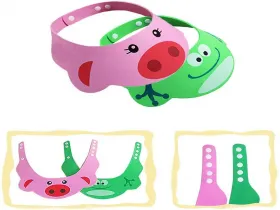
Opening a second sales market usually starts with the same instruction: "keep the product, change the artwork." A bath puzzle that sells well in one country gets a new language on the packaging, a different colour story for shelf presence, and a fresh compliance label. What buyers rarely plan for is that those changes travel through tooling, printing plates, foam colour and test reports at different speeds. This guide walks through how procurement teams at retail brands, gift companies and cross-border sellers can set up revision tracking before the first sample round, so a market expansion does not turn into an uncontrolled series of sample resubmissions.
Why artwork revisions multiply in a second market
In a first market, one set of drawings and one print plate usually carries the programme from sampling through bulk. In a second market, several elements change independently at once: the language printed on the product itself, the colour palette chosen for local retail, the packaging structure, and the raw material formulation required by the destination country. Each of these touches a different production step, which means each can be revised without the others changing.
That independence is where tracking breaks down. A team that approves "the new blue" by email may not realise the same code also drives the heat-transfer plate order. When custom EVA foam manufacturing involves stamping, laser cutting, printing and foaming in one factory, a single verbal change can ripple across four work orders. Revision tracking is what keeps those four work orders aligned to the same version of the truth.
Set up version numbering before the first sample
The most practical starting point is a naming rule agreed with the supplier and written into every file name, quotation and purchase order. A workable format carries four elements: product code, market code, revision number and date. The same string should appear on the drawing file, the rendering, the plate artwork and the sample label.
- Treat drawings, print artwork, packaging dielines and colour references as four separate documents that share one revision number.
- Number revisions sequentially and never reuse a withdrawn number, even if the change looks trivial.
- Record who approved each revision and on what date, in a shared sheet rather than in an email thread.
- Require written confirmation before tooling or plate costs are committed. The published cooperation process runs through design drafts and renderings, mold opening and printing molding, confirmation of signature, and a 30% deposit on signing the contract — fixed checkpoints that give each revision a dated approval.
Group revisions by what they actually change in production
Not every revision carries the same cost or lead time, and treating them as one undifferentiated list is a common planning error. Grouping changes into three tiers lets you decide quickly whether a new sample round is needed.
Cosmetic changes affect printed graphics only. Under heat transfer printing on EVA foam, the plate has to be re-made, but the cutting die and the foam formulation stay put. Fulikai's plate-making turnaround is quoted at 5-7 days, with sample plates at a modest cost, so cosmetic revisions can usually be absorbed without moving the bulk delivery date.
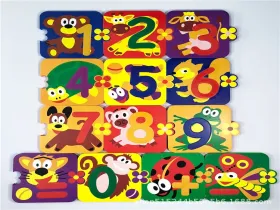
Structural changes affect shape, thickness or lamination. A foldable bath puzzle is the clearest example: one side carries screen printing, the other heat-transfer printing, and double-sided lamination has to hold precise fitting, while the fold itself is a packaging structure decision. Moving such a design into a second market may mean re-checking how the fold line behaves in warmer or colder climates. Structural revisions normally require a new sample and a fresh sign-off.
Material changes affect the foam itself. Colour is formed during one-step foaming with added colour masterbatch, so a palette change for a new market is a material decision, not a printing one. Material revisions also interact with testing: retests of colour fastness and tensile strength are reasonable whenever the formulation changes.
Track compliance documents as part of the revision
Compliance paperwork is where second-market launches most often stall, because the certificate a buyer relies on in one country may not be the right document in another. Fulikai states that it recommends raw materials meeting the standards of the destination country once the buyer names that country. The factory reports ISO 9001:2015 certification and CE, EN-71, FDA, FCC, RoHS, SGS and REACH certifications across its range.
Treat those certificates as a checklist to verify per order rather than as blanket claims. A toy sold to children in the Europeanunionneeds the applicable toy-safety documentation; a nail file or salon slipper may need a different set. Ask the supplier which specific report covers your product, your market and your batch, and record the report number against the revision it applies to. If you change material or ink, ask whether the existing report still stands.
Testing volume is worth confirming in writing too. Fulikai describes 16 types of tests during production, covering colour fastness, tensile strength, ink environmental testing and children's product safety, plus full manual inspection before shipment and support for third-party inspection. The company also reports factory audit documentation from Coca-Cola, Walmart and Sedex, and welcomes buyer audits. If your second market requires an audit by your own agent or platform, schedule it against a revision number, not against "the current version".
Keep one reference sample per approved revision
A revision log without physical references is only half a system. For each approved revision, keep one signed reference sample at your office and ask the factory to keep a matching retained sample. Both should carry the same revision string. When a shipment arrives with a colour that looks slightly different, the comparison is then a factual question: does it match the retained sample for this revision, yes or no.
Reference samples also protect you when an order moves to urgent production. In the Monster Jam custom EVA cheering hands case, a trading company spent months comparing manufacturers nationwide and used the Fulikai sample as its quality standard; when only 25 days remained before the event, production returned to the factory that already held the approved reference. A retained sample is what makes a compressed schedule recoverable.
Plan the second-market timeline around real lead times
Build the launch calendar backwards from your delivery date using the supplier's published figures. Fulikai states plate-making takes 5-7 days and bulk orders can be delivered within 15 days, with flexible allocation for urgent orders and dedicated staff for full-process order tracking. On top of that you need time for your own approval rounds, test reports and freight.
- Allow one full revision cycle between the first sample and sign-off; assume a second cycle if the design includes lamination or double-sided printing.
- Start compliance enquiries at the same time as sampling, not after artwork is frozen.
- Freeze artwork before tooling is committed, and log any later change as a new revision with its cost and lead time stated.
- Book third-party inspection against the final revision number, so the inspector's report references the version you actually approved.
What to send your supplier on day one
A short, complete enquiry prevents most tracking problems downstream. Send the drawing or physical sample, the destination country, the intended retail channel, and a list of the documents your market requires. If you are adapting an existing product rather than starting from scratch, send the last approved reference sample for the original market together with the specific changes you want; custom EVA foam cutting and stamping can often reuse the existing die when only graphics change.
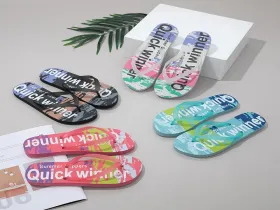
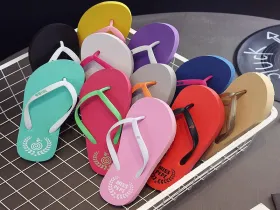
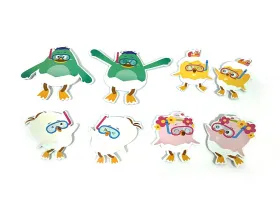
The product families most often adapted for a second market are already grouped on the site: wholesale EVA educational toys such as bath puzzles, alphabet sets and building blocks; wholesale EVA nail products including files, toe separators and disposable pedicure slippers; and wholesale water sports products such as kickboards and floating pool game sets. Each has its own document profile, which is exactly why the revision log should name the product family alongside the market.
A worked example: moving a bath puzzle into a new market
Consider a foldable EVA bath puzzle already sold in one country. For the second market, three things change: the letters on the puzzle move to the local alphabet, the colour palette is lightened for a different retail shelf, and the packaging insert gains local language text. In revision terms this is two material changes (print graphics and foam colour) and one packaging change.
With the tiers above, the plan writes itself: re-make the print plates for the new lettering, confirm whether the lighter palette needs a new masterbatch formulation, keep the cutting die unchanged if the fold geometry is untouched, and request children's product safety documentation for the destination market. Fulikai's Skip Hop bath puzzle case shows how much of this work sits in sampling: the original supplier could not combine screen printing on one side with heat-transfer printing on the other plus double-sided lamination, and after roughly six months of failed trials elsewhere the factory completed sample design ahead of its own one-week commitment.
The lesson for planning is not that sampling is fast. It is that a supplier who can hold a written revision number against a physical sample lets you compress the schedule later without renegotiating what "correct" means.
Frequently asked questions
How many sample rounds should I budget for a second-market launch?
Budget two rounds as a working assumption: one to validate the adapted artwork and material, one to confirm corrections. Designs with double-sided lamination or foldable packaging need more attention at the first round, so share those drawings early.
Does changing only the printed graphic require a new sample?
Usually a print plate and a printed confirmation are enough when the die and foam are unchanged, since plate-making is quoted at 5-7 days. Ask for a printed reference before bulk if the artwork includes multi-pass white-base printing, where saturation depends on process settings.
What happens to certificates when I change colour or ink?
Ask the supplier to confirm in writing whether the existing report still applies. Colour is introduced during foaming with masterbatch and ink choice affects environmental testing, so a material change can invalidate the document you filed for the previous market.
Can I reuse the same tooling for both markets?
Often yes, when only graphics and colours change; stamping and laser cutting can produce different shapes and colours from customer drawings without a new die. Structural changes to thickness or folding geometry generally require new tooling decisions.
Getting a second-market sample programme started
A Shenzhen factory of over 3,000 square metres with in-house foaming, cutting, stamping and laser processing means one supplier can hold every version of your product under one roof — and that is also why the revision log matters. When material, plate, die and test report all sit with the same EVA foam products manufacturer, a missing version number is what lets two different versions reach production at once.
To open a second market with a controlled sample programme, send your drawings or reference sample together with the destination country and required documents. Fulikai's service team reviews designs and offers improvement suggestions on details such as linework before tooling is committed, and provides full-process order tracking with 24/7 online support. Contact through the message page or call +86 13827489472 to discuss your revision plan.