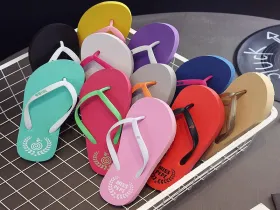
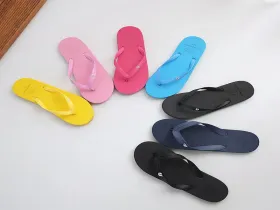
A nursery chain that puts garden kneeling pads with handles on its shelves is not buying one SKU, it is buying a colour programme — a black pad for the hardware-facing aisle, a green or pink pad for gift and seasonal displays, and often a private-label version carrying the chain's own artwork. That is exactly the situation in which an exclusivity agreement starts to matter. Left vague, it protects nobody: the factory keeps selling your moulding to your competitor two towns over, and you keep paying for marketing that lifts someone else's conversion. Below is what a workable clause set should cover, written from the buyer's side and checked against how a Shenzhen custom EVA foam products factory actually runs colour and tooling.
Start with what is being made exclusive
"Exclusive" is meaningless until the parties agree on which physical thing is exclusive. For a handled kneeling pad, four separate layers can each be locked down or left open, and most disputes come from conflating them.
- The tooling. The die that cuts the pad outline, the handle cut-out shape, and any mould used for embossed logos. If you paid for it, say so in writing: who owns the die, where it is stored, and what happens to it if the order programme ends.
- The artwork and print. A heat-transfer printed design or a hollow-cut logo is a separate asset from the pad blank. Two buyers can share an identical blank and still be fully differentiated by surface decoration.
- The colourway. This is the layer nursery chains most often get wrong. If your programme runs black, sage, blush and terracotta, spell out whether exclusivity covers those specific colours on that pad format, or every coloured pad the factory can produce.
- The retail listing. Some chains want the same item kept off named marketplaces and away from the factory's own sample pages during the season. That is a separate promise and needs its own sentence.
Define the territory, the channel and the clock
Three boundaries have to be drawn before anyone signs, because a factory that exports to Japan, South Korea, Europe and North America is going to keep serving other markets regardless of what you assume.
| Term | What to write down | Where vague drafting goes wrong |
|---|
| Territory | Named countries or customs unions, plus transit and resale language if dropshipping is involved. | "Worldwide" is unenforceable in practice and usually gets quietly narrowed by the supplier. |
| Channel | Retail stores, own e-commerce, marketplace listings, promotional/gift buyers. | A clause silent on promotional channels lets the same pad reappear as a branded giveaway at a lower price point. |
| Duration and volume floor | Start date, end date, minimum annual quantity per colourway, and what happens if the floor is missed. | An indefinite exclusivity with no purchase commitment stalls the programme; the supplier simply sells elsewhere "temporarily". |
| Renewal | Automatic or negotiated, and the notice period. | No renewal terms means the protection lapses in the middle of your spring season. |
Handle design and colour are where exclusivity is won or lost
A cut-out carry handle is what makes these pads sell as a gift line, and it is also the feature a competitor copies first. Fulikai's kneeling pad range shows how much variation sits behind one product family: an EVA garden kneeling pad with handle in high-density non-recycled foam, a two-pack black set measuring 18 × 11 inches at 1.57 inches thick, and a six-pack blue format at 16 × 8 × 1 inch. Same category, very different shelf propositions — which is why exclusivity should be written per specification, not per product name.
Colour needs the same treatment. Because EVA colour is formed during foaming with a colour masterbatch rather than painted afterwards, one colour standard can be carried across the thicknesses in your range, and the factory matches it to your reference swatch. Ask for the agreed colour standard to be recorded as part of the signed sample — that signed sample, not a chat message, is what you enforce against a year later when the second production run arrives slightly off-tone.
What the factory side should commit to in writing
- No identical or confusingly similar blank sold to another buyer inside the territory and channel for the term — with "confusingly similar" defined by outline, handle position and thickness range.
- Your artwork stays yours. Print plates, screens and laser-cut logo dies are not reused for any other customer's order, in or outside the territory.
- Tooling custody. Where your die is kept, that it is not used for third-party production runs, and that it ships or is destroyed on request at the end of the relationship.
- Quality continuity across colourways. Colour fastness, tensile strength and material environmental testing are part of the production test set; name the tests you expect to be repeated when a new colour enters the programme.
- Audit and inspection rights. Pre-shipment inspection reports, and the option for your own or third-party inspection before the balance is released.
What you, the chain, should commit to in return
Exclusivity that costs the supplier volume will not survive a slow season. A credible agreement gives the factory something concrete: forecast visibility by colourway, and a minimum annual quantity per SKU with a defined remedy if that floor is missed. On custom EVA tooling the customary payment structure is a 30% deposit on signing the contract, with the balance paid after pre-shipment inspection passes — which also gives you a natural quality gate rather than a dispute after goods land.
Add two practical protections most buyers forget. First, a colour-drift clause: define how much deviation from the approved signed sample is acceptable and what the remedy is (rework, credit, or replacement on the next order). Second, a sell-through and stock clause covering what happens to unsold seasonal colours at expiry — markdown rights, return-to-factory, or your right to keep selling through remaining inventory.
Before signing, run the specification check. Confirm that every colour in your programme is available at the thickness you want, that the handle cut-out survives tooling at that gauge, and that your print method — heat transfer or silk screen, on a textured or smooth surface — is fixed for all SKUs. Exclusivity over a specification you have not yet validated protects a product that may never reach your shelves.
Bringing it to production without losing the exclusivity
The order sequence matters for enforcement, because each approval step creates a dated record. The route runs from requirements consultation through proposal and quotation, design drafts and renderings, mould opening and print moulding, signature confirmation, and deposit on signing. Keep every signed artefact — the approved sample, the colour standard, the artwork proof — attached to the exclusivity agreement as schedules. When a dispute arises over whether a competitor's pad is "the same product", those dated approvals are what decide it.
Timing also shapes what you can realistically lock. Plate-making typically takes five to seven days, and bulk production runs after that, so a seasonal colour programme should have its exclusivity clause signed before tooling starts, not after the first container ships. If your chain plans several colourways across two seasons, agree the full set up front; adding colours one at a time invites the supplier to treat each as a new, unprotected item.
Fulikai manufactures custom EVA foam kneeling pads with cut-out handles in high-density non-recycled foam, with colour and size made to your specification and logo applied by heat-transfer or silk screen printing. Talk through your colour programme, tooling ownership and exclusivity terms with the team at wholesale EVA garden kneeling pads or send your requirements via the contact page.